
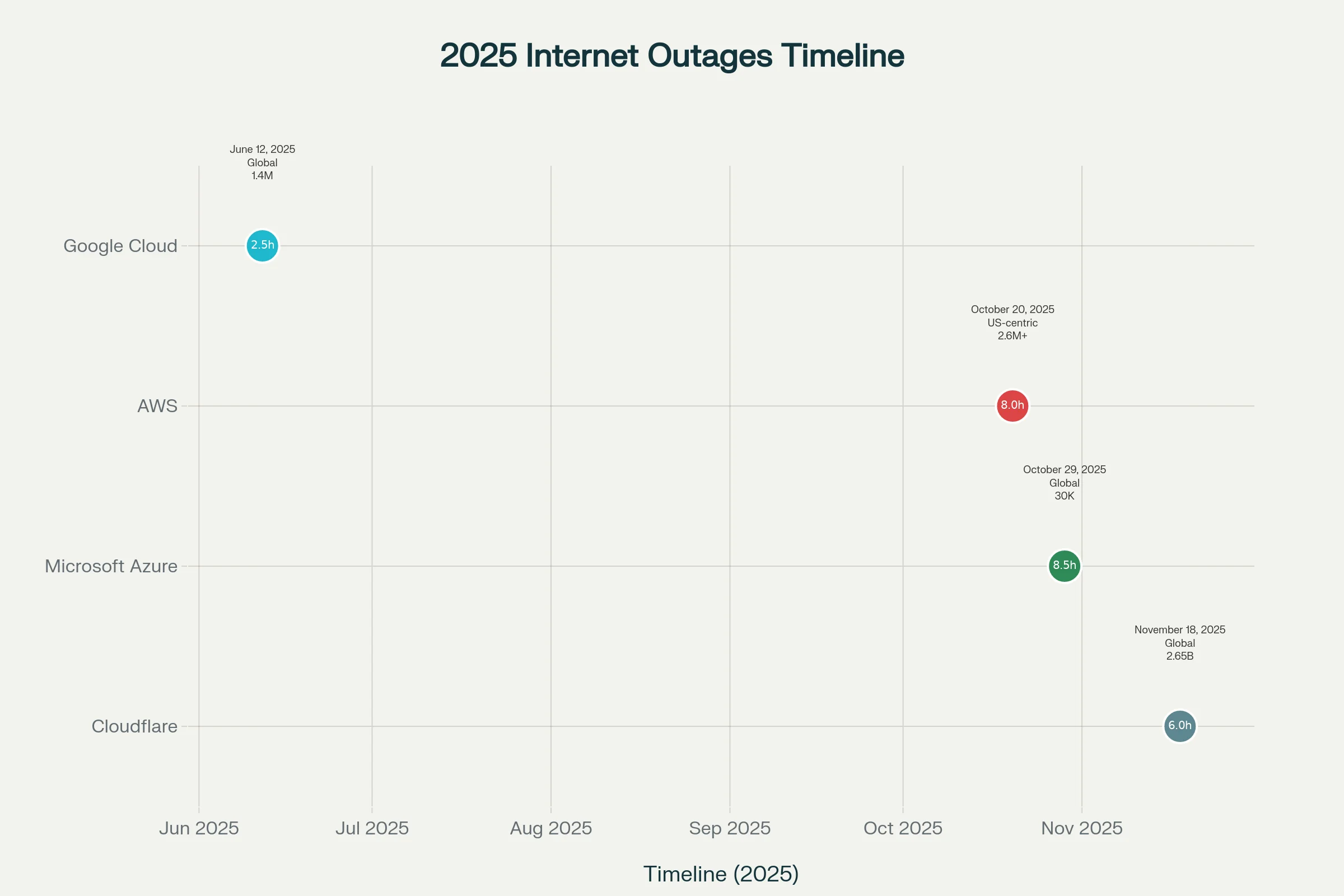
November 18, 2025. Cloudflare went down for six hours. During that time, 2.65 billion people lost access to Twitter, ChatGPT, Spotify, and thousands of other services they use every day.
And it wasn’t even the first time that year. Google Cloud crashed in June. AWS went down for eight hours in October. Microsoft Azure followed nine days later.
Four massive failures in twelve months. When does a crisis stop being a crisis and just become part of normal operations?
The brands that handled these moments well weren’t necessarily the biggest ones or the ones with the best jokes. They were just the ones who’d stopped pretending this wouldn’t happen.
Most brands still treat internet outages the way they treat natural disasters. Hope it doesn’t happen. Panic when it does.
The smart ones have already accepted it’s coming and built a plan for when it arrives.
What Happened When Everything Broke
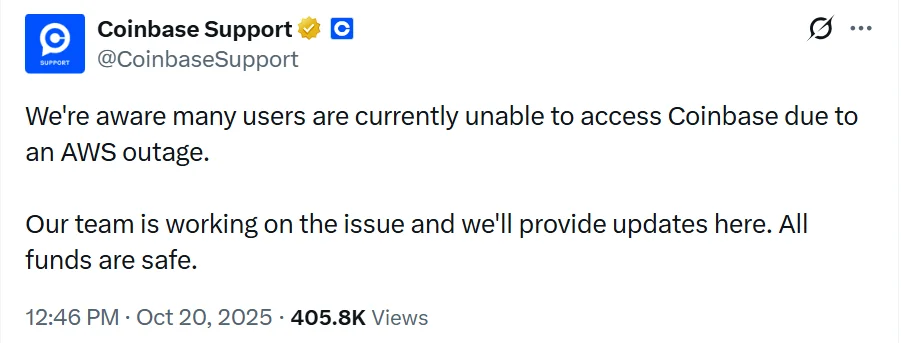
AWS crashed on a Tuesday morning in October. Within an hour, Coinbase posted “All funds are safe” on Twitter. Airlines got updates out fast. Tech companies sent people to backup pages.
Other brands kept running ads to checkout pages that didn’t work. Scheduled posts went live pretending everything was fine. Companies that only existed on Instagram just disappeared for eight hours.
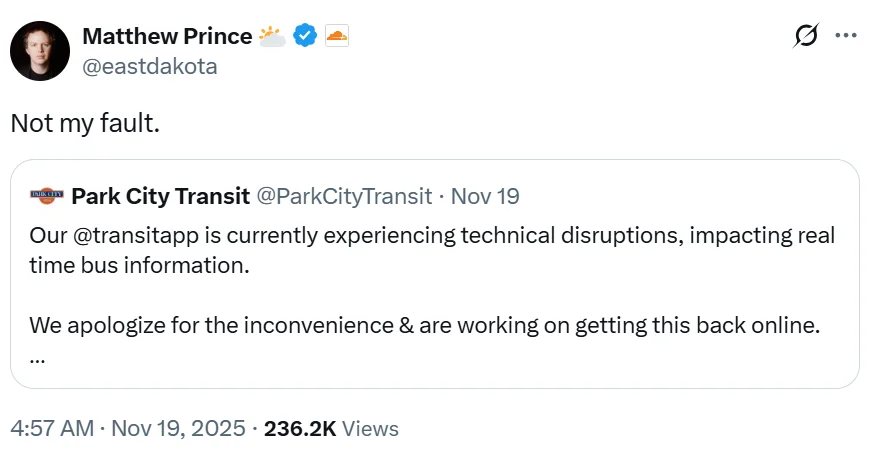
When Cloudflare went down in November, their CEO did something that looked simple but wasn’t. Someone tweeted a complaint about an unrelated tech problem. He quote-tweeted it: “Not my fault.”
Three words. Self-aware humor without trying too hard. It worked because he acknowledged what everyone was dealing with without being defensive or corporate. Fast. From leadership. That’s what made it land.
Users made memes immediately. The repair worker moving at impossible speed. Jokes about the world ending. Comments about Twitter being the last platform standing. Brands that joined these conversations without being pushy got huge engagement. Brands that showed up two hours later looked completely out of touch.
Looking at every major outage in 2025, three things separated brands that won from brands that fumbled.
Platform awareness. When Instagram goes down, your Instagram posts reach nobody. People move to whatever still works. This seems obvious until you watch how many brands miss it.
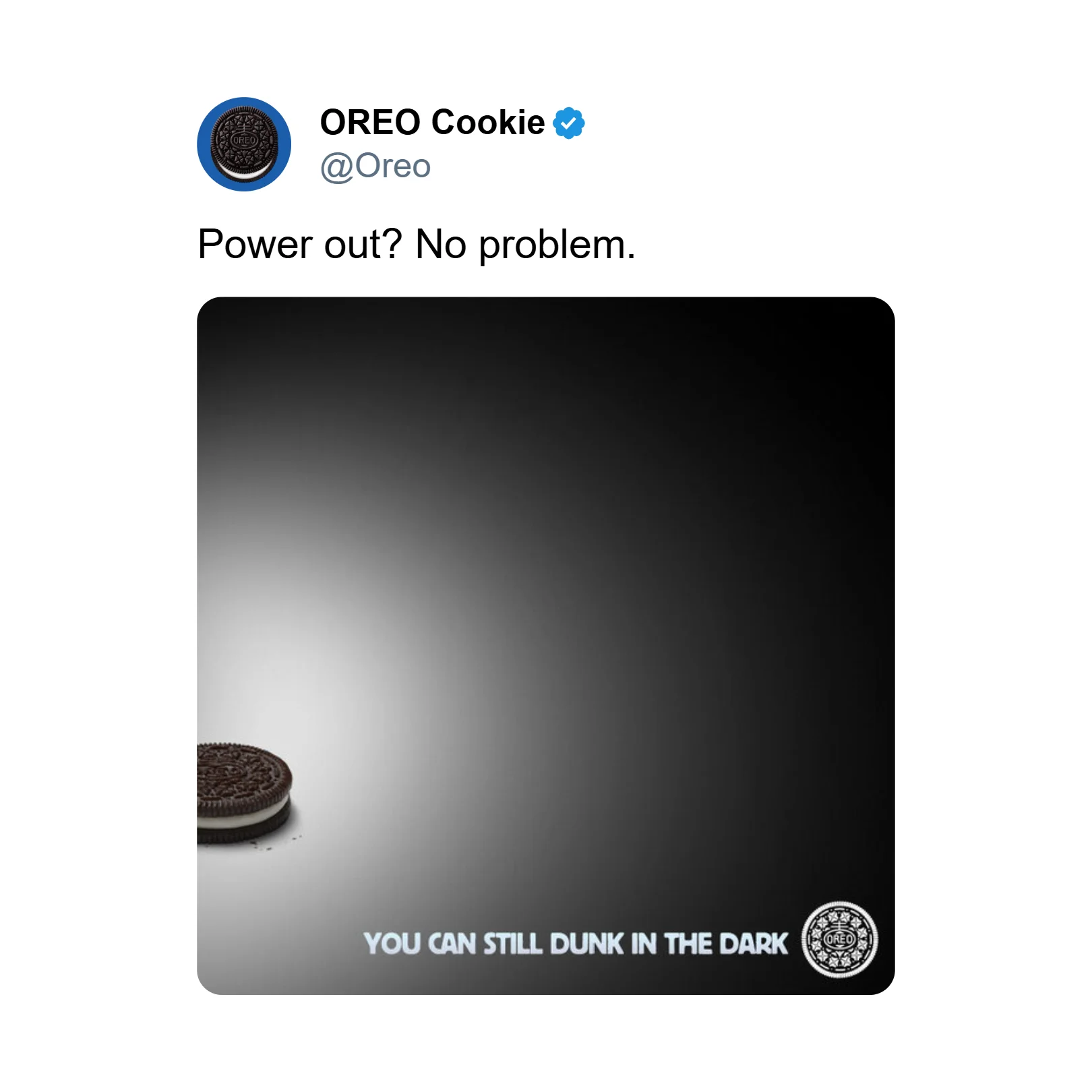
Speed over everything. The 2013 Oreo blackout tweet got 10,000+ retweets because it was fast and relevant. Not because it looked perfect. A text post in ten minutes beats a polished graphic in two hours.
Context determines tone. Humor works when the failure isn’t yours. When Meta’s platforms crashed in March 2024, Disney told people to stream instead of scroll. Swiggy suggested ordering food. Dominos pushed pizza breaks. This worked because the failure wasn’t theirs and they offered real alternatives. But if your platform breaks, humor kills you. People want transparency then.
The Shift Nobody’s Making
Here’s what most brands still get wrong. They’re treating outages like rare events that require special crisis protocols.
But research shows 31 percent of businesses lose over $1.2 million every time the internet goes down. When something costs that much and happens four times a year, it’s not a crisis. It’s a cost of doing business.
The question isn’t whether your platform will go down. It’s which part breaks first and where your customers go when it does.
Winning brands have already answered that question. AWS US-EAST-1 is where thousands of services can fail at once. Cloudflare moves more than a fifth of all web traffic worldwide. These brands have mapped every dependency in their stack and figured out exactly what breaks when any piece fails.
Losing brands are still discovering these dependencies in real time while customers are complaining.
The difference isn’t intelligence. It’s whether you did the work before you needed it.
What You Actually Need
You don’t need a crisis team. You need monitoring that tells you what’s breaking before your customers do.
Downdetector shows real-time outage reports globally. StatusGator tracks thousands of cloud services. A Twitter list of status accounts like AWS Support and Cloudflare Status works. RSS feeds from their pages. Takes thirty minutes to set up. Costs nothing.
Connect IFTTT or Zapier to alert you when reports spike. When AWS goes down, you know in five minutes instead of two hours later when the damage is already done.
Once you know something’s broken, you have about ten minutes to matter. Three minutes to confirm if it affects you. Seven minutes to get something out.
Text update. Email blast. Post on whatever platform still works. Doesn’t need to be clever. Just needs to be there.
If you’re still thinking about it at minute fifteen, everyone’s already moved on.
Three Templates That Cover Everything
The acknowledgment. “Instagram seems to be down. Reach us at [email/phone/Twitter] while this sorts out.” Use when your main channel fails.
The redirect. “Can’t access our site? Find us here: [working link/address/number].” Use when you’ve got alternatives that work.
The human moment. “Guess we’re all getting an unexpected break from Instagram today. See you when it’s back up.” Use this one carefully. Only if your brand already talks this way. Only when the problem is clearly someone else’s infrastructure breaking.
Write these now. Save them somewhere your team can grab them without asking anyone. Next time something breaks, they’re ready.
What Almost Nobody Covered
Zero major brands acknowledged disabled users during any 2025 outage.
Screen reader users lose everything when sites crash. People who need captions can’t follow video updates. People with mobility issues can’t navigate without keyboard access.
One line fixes this. “Text updates at [link]. Phone support at [number].”
Small businesses have an advantage here that nobody talked about. Big companies have geographic redundancy and backup systems. They also have layers of approval and slow-moving processes. Small businesses can move immediately.
During 2025’s outages, small businesses that went local built real connections. “Website’s down but we’re at [address]” worked because it was fast and genuine.
Build email lists now. You own that channel. Put your phone number everywhere. Make your physical address visible. When complex digital systems fail, simple analog backup wins.
When Silence Wins
Never joke if the failure is yours. Cloudflare wrote 6,000 words explaining exactly what broke and why. That transparency builds trust even during failure.
Skip humor if people are losing money or can’t access critical services. Healthcare and financial security aren’t funny.
If you’re two hours late, forget being clever. Post something straightforward or stay quiet.
Before you post anything, ask yourself this: if you were the one dealing with this problem right now, would your message feel helpful or would it just irritate you more?
Where This Comes From
Look at what actually broke in 2025. Cloudflare had a software bug. AWS had DNS problems. Azure had a configuration error. No cyberattacks. No hackers. Just complex systems being complex.
When everyone’s stuck in the same technical mess and nobody’s to blame, humor becomes safer. People understand that complicated things sometimes break.
Map what you depend on right now. Payment processing. Store platform. Login systems. Email service. Analytics. What stops working if any of those fail?
A lot of brands won’t bother with this. They’ll read this article, agree it makes sense, then do nothing about it. When the next outage hits, they’ll scramble the exact same way they did last time.
The gap between brands that grow and brands that fade isn’t about knowing what to do. It’s about actually doing it before the moment forces your hand.
What Actually Separates Winners
The brands that handled 2025’s outages well didn’t win on talent or budget. They won because they’d already done the unglamorous preparation work.
Monitoring was set up. Templates were written. Backup channels were tested. Dependencies were mapped. When everything broke, they didn’t debate what to do. They just ran the plan they’d already made.
The brands that struggled treated each outage like it came out of nowhere. They argued about messaging. They waited for approvals. They missed the window completely. Then they watched competitors capture all the attention and couldn’t figure out why.
Most marketing advice focuses on being authentic or creative or bold. All good things when your platforms are working. When your platforms break, none of that helps if your customers can’t reach you.
Four major outages hit in 2025. More are coming. Your platform will go down at some point. Not maybe. It will.
The real question isn’t whether you’ll face an outage. It’s whether you’ll find out about it eight minutes before your customers have to tell you. Whether you’ll have something ready to say that actually helps. Whether people will remember you stayed reachable when everything else went dark.
Set up the monitoring today. Write the templates this week. Test your backup channels. Handle the unglamorous preparation work now so you’re not making it up under pressure later.
The brands that win during the next collapse won’t have the wittiest posts or the fattest budgets. They’ll just be the ones who were actually ready when the moment arrived.
Being ready isn’t some advanced marketing technique. It’s just being there when it counts.
If you need help building marketing systems that survive platform failures, get in touch via our contact page.
FAQs
1: What to do when social media goes down?
First, confirm the outage is real by checking Downdetector or Twitter (which usually stays up). Then immediately switch to channels you own: email your list, post on your website, or text customers if you have their numbers. Don’t wait to see if the platform comes back. Move to working channels within 10 minutes.
2: How to communicate with customers during an outage?
Use whatever channel still works. If Instagram is down, post on Twitter or Facebook. If all social media is down, send an email blast. If your website is affected, post your phone number and physical address on platforms that work. The key is being reachable, not being everywhere.
3: What content should I prepare before the next outage?
Write three templates now: one acknowledging the outage with alternative contact info, one redirecting to working channels, and one relatable moment post if that fits your brand. Save them where your team can grab them instantly without hunting through files.
4: What’s the biggest marketing mistake during outages?
Not knowing an outage is happening until customers tell you. Set up monitoring so you find out in 5 minutes, not after your comment section fills with complaints. Everything else in your response depends on early awareness.
