
Garena had a problem during Ramadan 2024. The Singapore gaming company wanted to grow Free Fire’s player base in Indonesia. Most brands would have hired a Muslim influencer, handed them a script, and shipped it.
They did something else. They collaborated with Muhammad Fauzi Filawan from Frontal Gaming, who has 12 million YouTube subscribers. Fauzi is a gamer who observes Ramadan, and his gaming-Ramadan perspective featured in content that tied in-game rewards to Umrah pilgrimages. Players could win family trips to Mecca.
The campaign hit a 52% view-through rate. Free Fire shot to number one on Indonesia’s Google Play Store during Ramadan. The content spread organically because it aligned with actual lived experience, not assumptions.
That’s the difference between using Muslim creators to execute your idea versus involving them in shaping the content itself.

How Most Brands Actually Work
Strategy gets built a month out. Creative gets locked two weeks before Ramadan starts. Then someone says “we should probably get a cultural check on this.”
A Muslim influencer reviews the finished work. They’re there to catch problems, not create opportunities.
That’s not collaboration. That’s late-stage consultation.
Real collaboration means Muslim creators contribute to content development. They help figure out what your product category actually means during Ramadan in their specific community.
LG’s 2024 “Life’s Good When Shared” campaign across the Middle East and Africa took a different approach. They didn’t script the content. They asked creators what Ramadan moments meant something real to them.
The videos showed actual family gatherings and real moments of generosity. Nothing corporate about it. The campaign got 61 million views. Sales jumped in UAE and Saudi Arabia because people could tell it wasn’t manufactured.
Now look at ELARABY Group’s 2025 campaign. Their ad said “Ramadan means mama.” Sounds touching in a boardroom. But when it launched, some saw it differently. One outlet called it insensitive—what about orphans or people who’d lost their mothers?
Someone needed to raise a hand earlier and ask if this accidentally leaves people out. That only happens when diverse voices are contributing to content instead of just reviewing finished work.
The Value Beyond Risk Management
Sure, involving Muslim creators early helps you avoid mistakes. You won’t use wrong symbols or schedule food ads during fasting or say something that lands badly.
But that’s not why this matters most. The real value is finding angles your team can’t see.
Old El Paso ran a #WrapItUp challenge in UAE back in 2021. It’s become a reference point for how to tie brands to social causes. They partnered with TikTok influencers who pointed out something real: people cook way too much for iftar. Then they feel terrible about the waste.
That problem became the whole campaign. Challenges for turning leftovers into wraps. Food bank donations for each entry.
Four million people saw it. 90,000 hit the recipe page. It worked because it tackled an actual pain point instead of generic family talk.
You only get that kind of insight by working with people who live this stuff.

Why One Global Campaign Fails Everywhere
Brands build one Ramadan campaign and try to run it from Dubai to Jakarta to London. It bombs in all three places because the context changes completely.
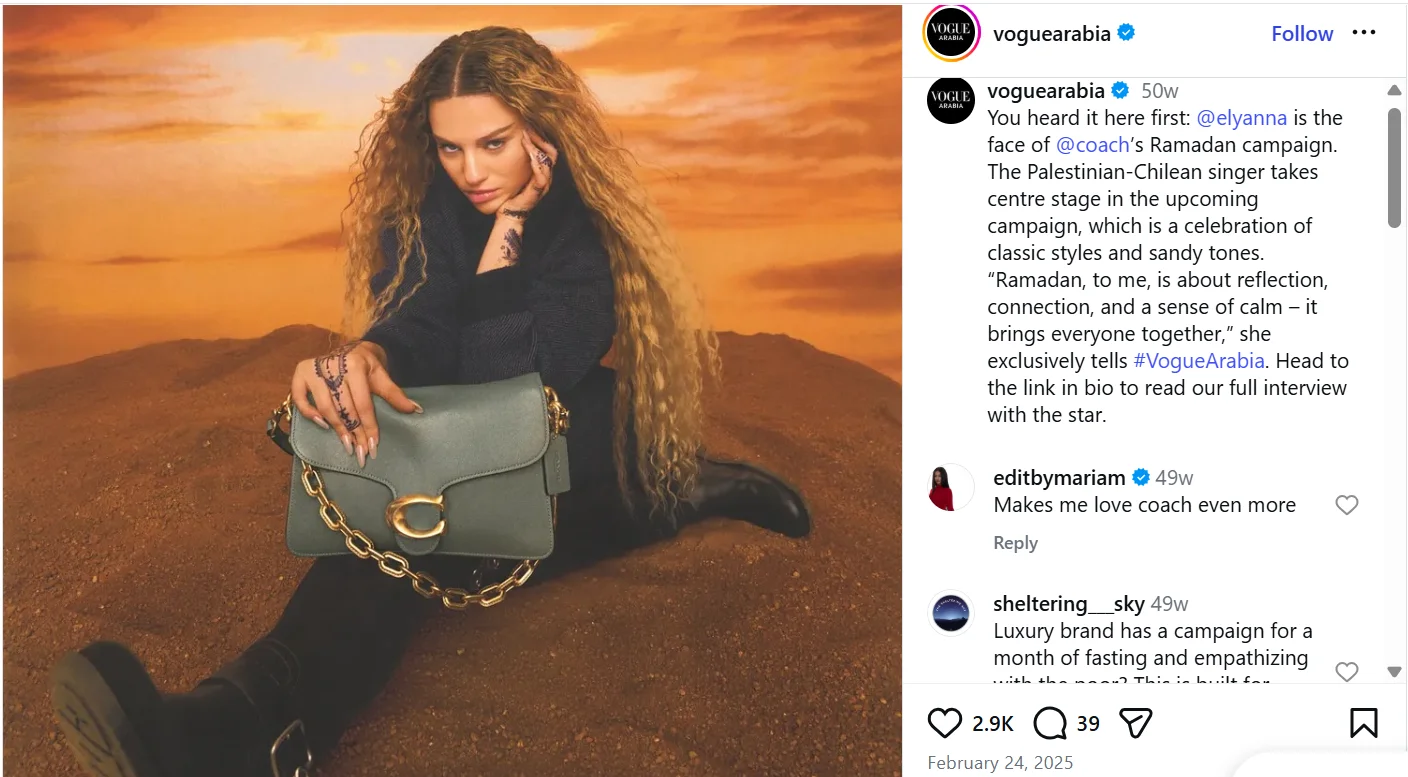
Coach brought Palestinian-Chilean singer Elyanna into their 2025 campaign. Her background gave them more than representation. She understood how to speak to young Muslims juggling different cultural identities.
Dior ran a Snapchat AR experience in MENA during 2024. 4.4 million people tried products virtually. Over 400,000 tested lipstick shades. That works in markets where Ramadan shifts the entire culture around you.
Try running that in places where Muslims are doing Ramadan while everyone else is on their regular schedule. Completely different challenges and opportunities.
You need local Muslim creators in content development for exactly this reason. Someone has to say “this lands in Riyadh but feels wrong in Toronto” before you blow the production budget.
The Micro-Influencer Pattern
Big brands default to celebrity partnerships. Big follower counts seem safer. But look at what studies actually show: micro-influencers regularly pull 2-3x better returns than celebrities. Higher trust in smaller communities. Better engagement.
It’s not just the lower cost. They’re actually part of specific communities.
A celebrity with 5 million followers gives you reach. A micro-influencer with 50,000 in one city gives you resonance. They know how Ramadan actually happens there. What problems people face. How the day flows.
Brands working with networks of micro-influencers in content development got more than diverse posts. They got intelligence spread across communities. Five creators from five places will catch things one celebrity misses completely.
There’s a practical side too. Micro-influencers have time to collaborate for real. A celebrity gives you two hours for a shoot. A micro-influencer will spend half a day on concepts because this partnership matters to their business.
What Actually Changes
Garena’s approach to connecting gaming with Umrah pilgrimages came from Fauzi’s lived experience at the intersection of gaming and faith.
The Raw is a skincare brand in Malaysia. They brought creators into their TikTok planning for 2024 Ramadan. Based on that input, they ran a mix of branding ads and Shop Ads together. Their conversion rate jumped 23.8% and cost per purchase dropped 10.2%. Same budget, smarter spending aligned with cultural insight.
Coca-Cola’s Ramadan work in MENA tends to focus on iftar unity. Their Arabic versions perform better than straight translations because they go deeper into the language.
Almarai took AI personalization pretty far in 2025. They created 1,200 YouTube ad variations. Each matched what you were watching. Cooking show? You’d see cooking cream ads that referenced the show. 29.4 million reach, 56.8% completion rate.
That personalization worked because Almarai is Saudi-based. They already understand the cultural context at a deep level. Another brand using the same AI tools without that knowledge would probably come off as invasive instead of helpful.
What Brands Can Do Now
Ramadan starts next week. Your creative is probably locked. But Ramadan runs 30 days and engagement patterns shift throughout.
The first week or two, people are adjusting to fasting rhythms and focusing on spiritual practice. Second half of the month, Eid urgency kicks in. Gift searches spike, shopping gets intense. If your campaign stays static, you’ll miss these shifts.
Get Muslim creators into your content calendar review right now. You might not need new content. You need someone to flag which scheduled messages will work versus which ones might backfire during different phases.
For real-time social stuff, bring in creators who can help you read the room as things develop. B-Laban ran a 2025 Ramadan campaign that took shots at El Abd, a competitor. Some people thought it was bold. Others saw it as disrespectful for a month about unity. Mixed reactions.
If you’ve got budget for fast partnerships, micro-influencers can actually move quickly. Most celebrities booked their Ramadan calendars months ago.
The bigger opportunity is next year. Brands that build real ongoing relationships with Muslim creators, that bring them into content conversations beyond just Ramadan, they’re building knowledge that competitors can’t easily copy.
What This Actually Is
Marketing TO Muslims: make something, then ask influencers to promote it.
Marketing WITH Muslims: involve them when you’re figuring out what to make.
One might perform okay if you throw enough money at it. The other gives you insights that create content people actually want to share.
Look at the pattern from examples spanning 2021-2025. ELARABY built content without getting diverse input early. Mixed reception—the kind that happens when brands skip cultural input during creative development. Garena, LG, Old El Paso, Coach involved Muslim voices in content development. Strong performance across the board.
This isn’t about diversity boxes. It’s about making better content by working with people who know the context you’re trying to reach.
The gap between brands that get this and brands that don’t keeps widening. The ones closing it are treating culture as intelligence for content work, not a box to check after everything’s done.
Planning a Ramadan campaign and don’t want it to land wrong? CREZEMO helps brands build campaigns that actually connect. Get in touch via our contact page.
FAQs
1: How do you market to Muslims during Ramadan?
Start by having conversations with Muslim creators before you build anything. Ask them what matters in their community during Ramadan and what feels authentic versus what feels forced. The goal is understanding context, not just getting approval on finished work. Brands that do this early avoid expensive mistakes and find opportunities their internal teams would miss completely.
2: When should brands start planning Ramadan campaigns?
Start building relationships with Muslim creators now, not just during Ramadan planning season. The brands that do well are the ones treating this as ongoing work, not a once-a-year checkbox. If you only talk to Muslim communities when you need something from them, that shows. Authentic partnerships take time to build and pay off across multiple campaigns.
3: What mistakes do brands make with Ramadan marketing?
Running identical campaigns across completely different markets is a common mistake. Muslims in the Gulf experience Ramadan differently than Muslims in Southeast Asia or Western countries. Cultural context changes everything. What feels right in one place can feel completely off in another. Localization means more than just translating words into different languages.
4: What content performs best during Ramadan?
Content that solves real problems instead of repeating generic themes performs best. People engage with brands that understand their actual daily experience during the month. Timing also matters because how people engage shifts week by week. Early Ramadan has different priorities than the lead up to Eid. Static campaigns that don’t adjust throughout the month miss these natural shifts in behavior and attention.
